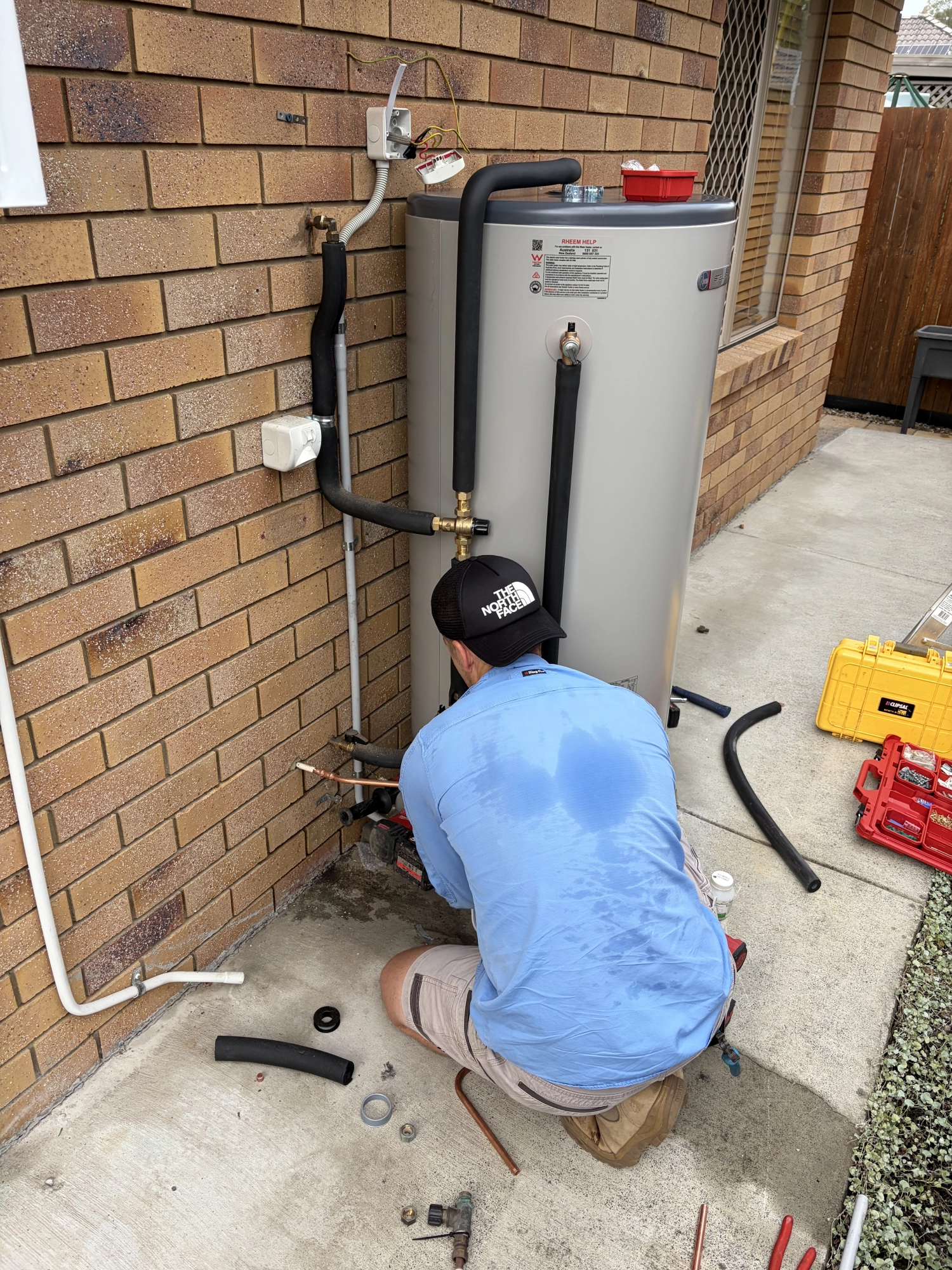
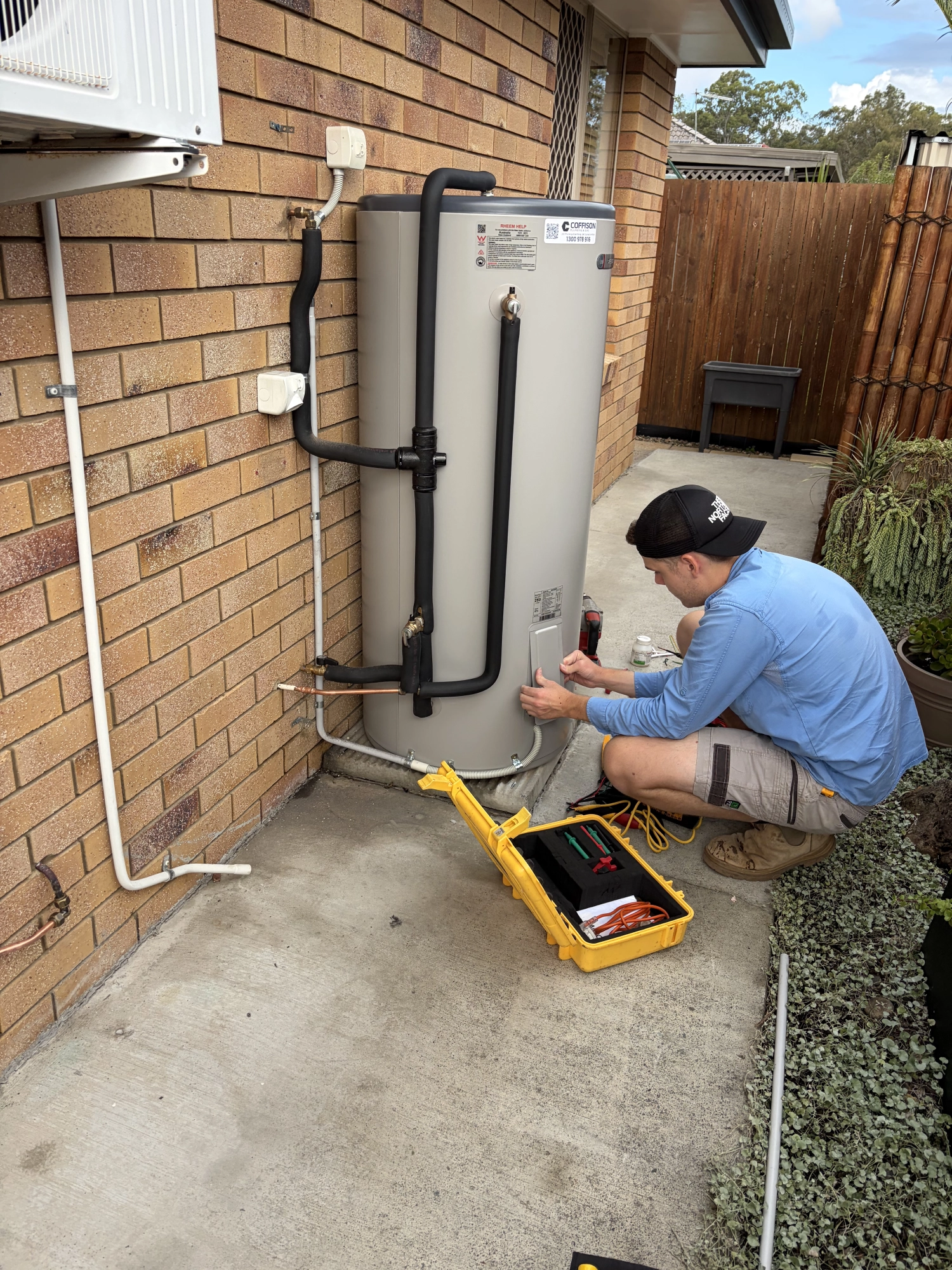
We recently completed a comprehensive solar hot water system removal and conversion for a homeowner in Redcliffe. By replacing a 19-year-old thermal setup with a premium Rheem Stellar stainless steel hot water system, we delivered a streamlined, low-maintenance solution designed to integrate perfectly with the property’s new solar PV panels.
System Decommissioning & Site Clearance
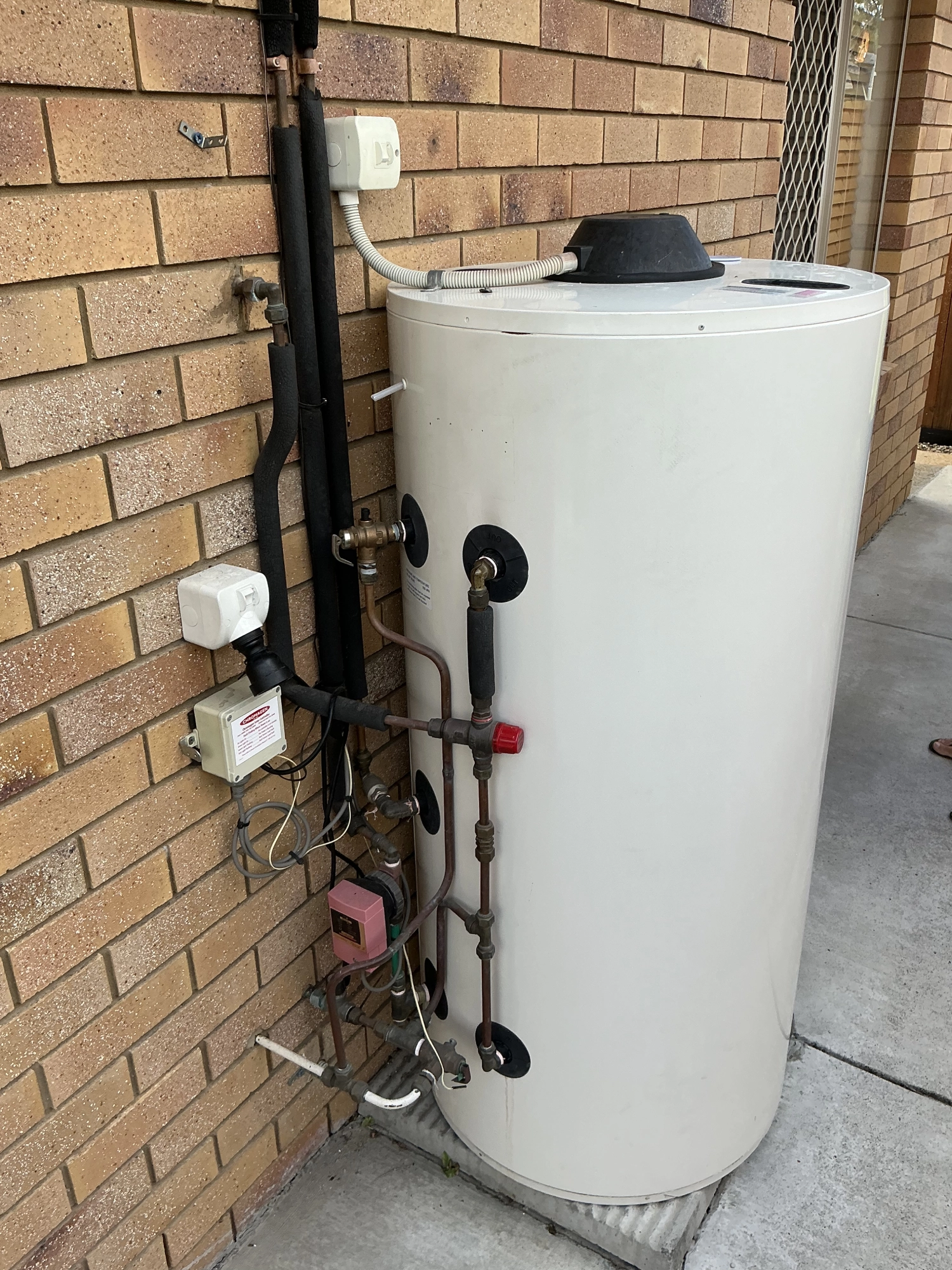
We started by safely isolating and stripping out the entire 19-year-old thermal configuration. This included removing the bulky tank, the wall-mounted controller, the circulation pump, and the redundant flow-and-return pipework from the roof to leave the site clean and ready for the new install.
Corrective Drainage & Foundation Protection
A major part of our approach involved rectifying poor workmanship from the previous installation. We ran a brand-new TPR drain line approximately 2.5 metres to ensure the system now discharges safely into the stormwater system, rather than dumping water directly onto the concrete slab.
Precision Electric Hot Water System Installation
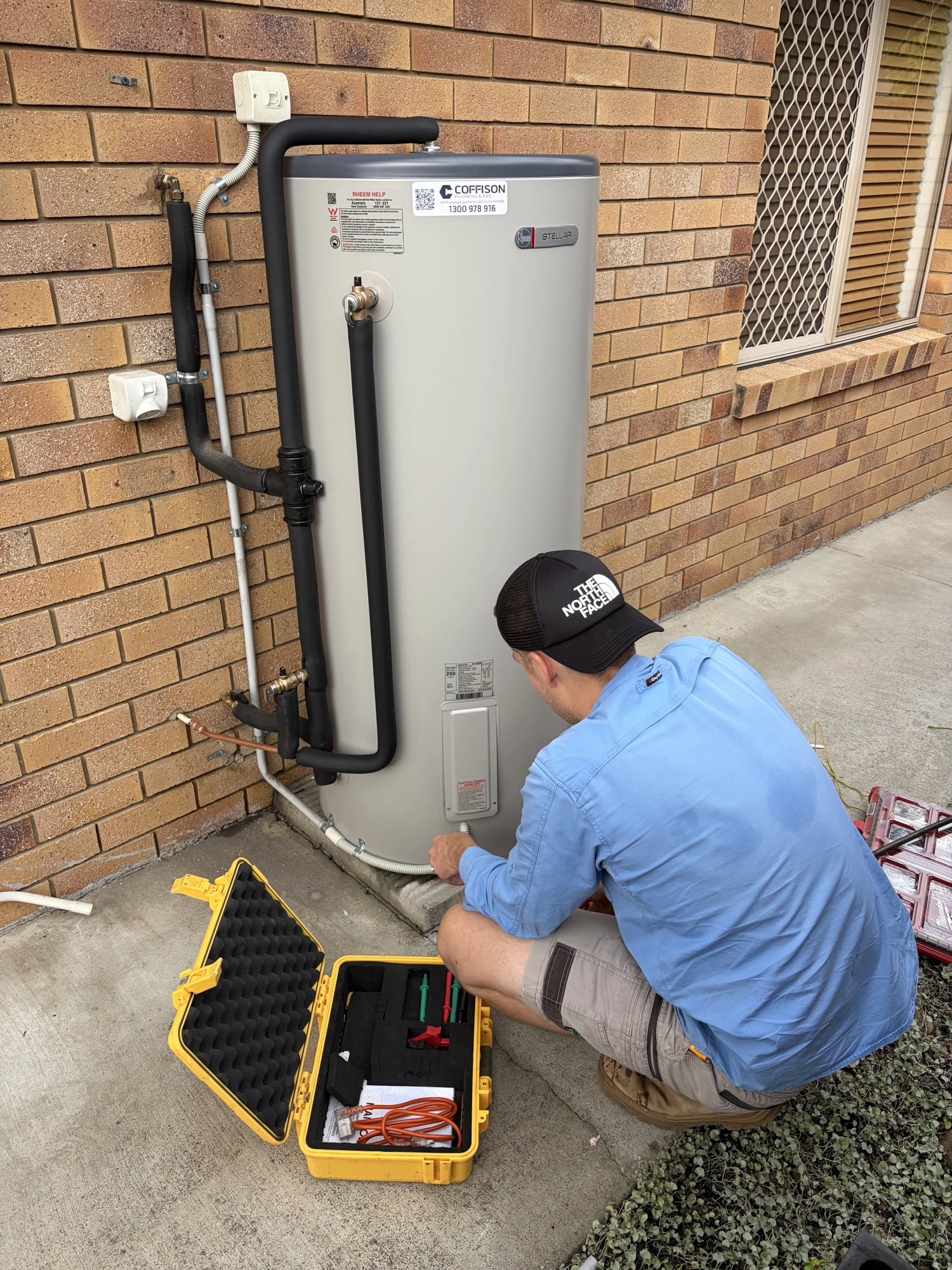
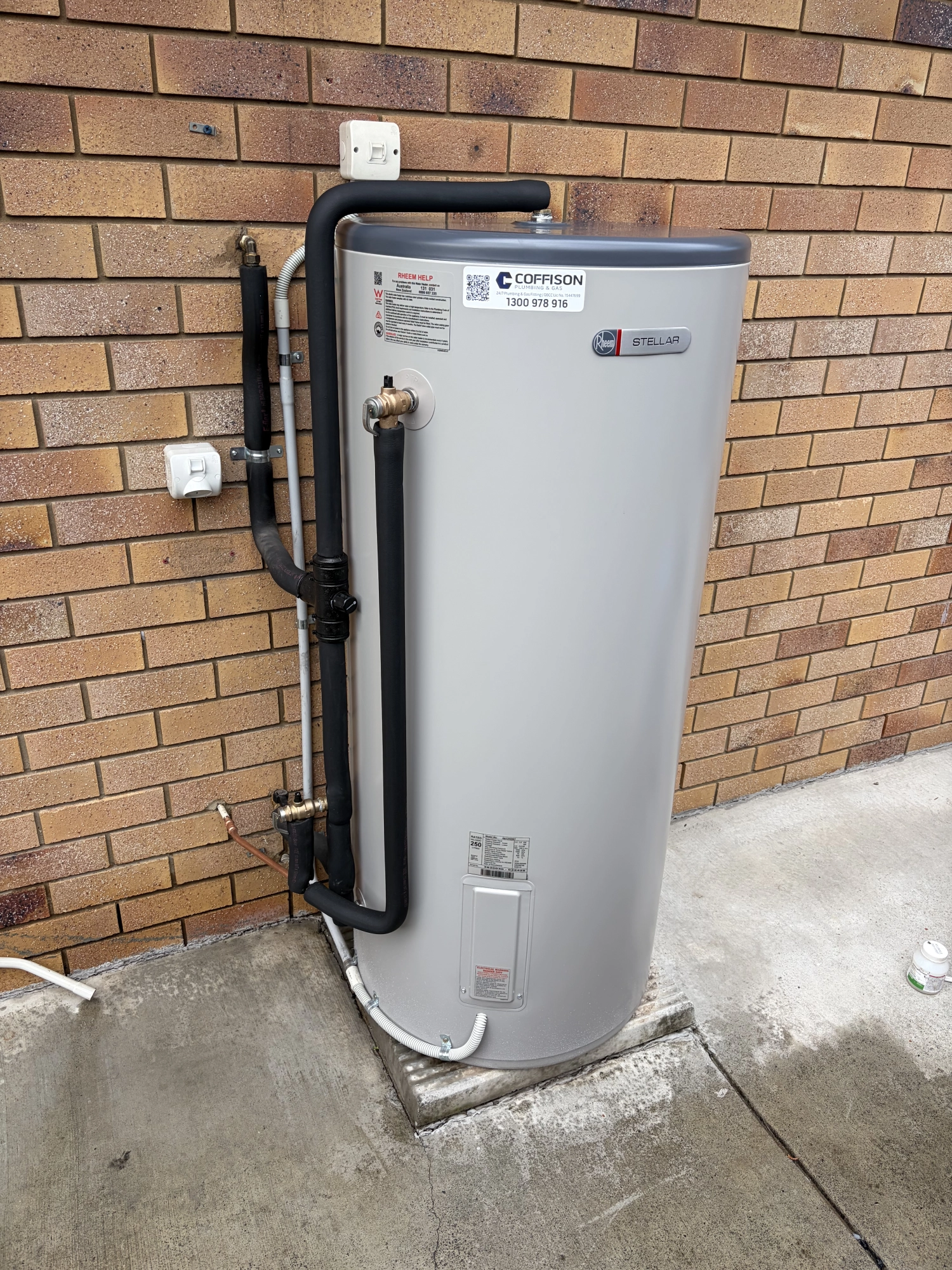
We positioned the new Rheem Stellar Stainless Steel unit and ran fresh copper lines with a high-end, perfectly level finish. To handle the Redcliffe salt air, we applied heavy-duty, UV-resistant armor lagging to all exposed hot and cold pipework to maximize thermal efficiency and durability.
Electrical Safety Upgrade
Our electrician performed a full electrical safety upgrade, replacing the property’s dated safety switch with a modern RCBO. This ensures the new heating element and thermostat are fully compliant with current standards and safely integrated into the home’s power supply.
Rectifying 19 Years of Non-Compliant Drainage
The biggest technical hurdle was the existing drainage hazard. For years, the old system had been dumping water straight onto the slab, creating constant moisture near the house foundations. We solved this by extending the TPR drain to the stormwater, a “foundation-saving” fix that the previous installers had ignored.
Clearing a “Web” of Redundant Infrastructure
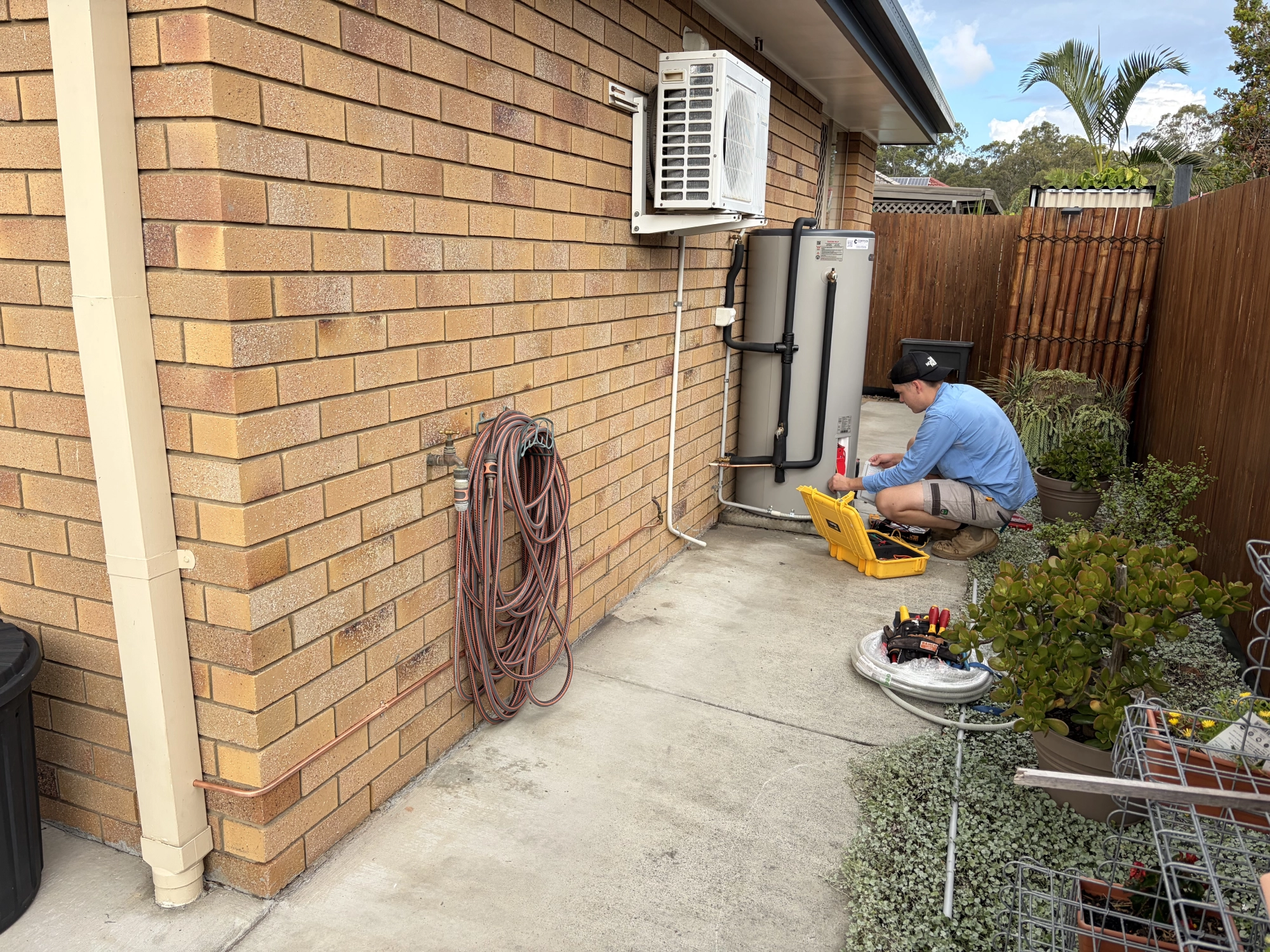
After two decades, the side of the house was a messy web of old solar pipes and electrical cables. We carefully decommissioned and removed every redundant component to transform a cluttered area into a sleek, professional-looking service hub.
Overcoming Outdated Electrical Standards
The existing switchboard wasn’t up to the task of safely managing a modern electric storage unit. By identifying this during our initial assessment and having our sparky upgrade the safety switch to an RCBO, we turned a potential safety risk into a fully certified, compliant installation.
The Rheem Stainless Steel Advantage
By choosing the Rheem stainless steel hot water system, the client won’t have to worry about anode replacements every five years. It’s a premium, long-life solution that perfectly matched his high standards for home maintenance.
A Fully Certified Conversion
This wasn’t just a swap; it was a total solar to electric hot water conversion. We wrapped up the job with a QBCC Form 4 submission and full testing, leaving the client with a streamlined system that’s ready to soak up his solar power.
We successfully converted a complex, outdated setup into a sleek, high-efficiency system in a single-day, same-day service.
Same Day
Redcliffe QLD
A. Jang
Thinking of making the switch to a low-maintenance stainless steel system? Whether you need a conversion or a brand-new install, the Coffison team provides the total trade coordination you need.
Give us a call today!
Vitreous enamel tanks use a sacrificial anode that needs replacing every five years to prevent rust, whereas a Rheem stainless steel hot water system is naturally corrosion-resistant. Choosing stainless steel eliminates those ongoing servicing costs and offers a lighter, more thermally efficient solution for your home.
If a TPR valve dumps water directly onto your concrete slab rather than into a proper drain, it can cause persistent moisture issues and damage your home’s foundations. We ensure all hot water systems installations include a compliant drain line to safely discharge water into the stormwater system.
We can typically replace a solar hot water system and complete the full electric conversion in a single day. Our team handles everything from the solar decommissioning on the roof to the final electrical safety checks, ensuring you have hot water by the afternoon.